
Exploring Children’s Perceptions of Race
Inquiring into their thinking about Friendship, Fairness, and Bias.
Children begin to form ideas about friendship, fairness, and social differences much earlier than we often assume. In everyday classroom interactions, their choices, preferences, and explanations offer valuable insights into how they understand the social world.
This classroom-based inquiry at Big Wonder explores how young children think about friendship, fairness, and social bias. By observing their responses, we aim to better understand early patterns of thinking and what they might mean for educators and families. This will be used as we continue to develop our race-consciousness framework and anti-bias methods of education.
Our ongoing classroom inquiry explores how young children make sense of differences, especially skin color, and how they form ideas about others. This is also an evolving process shaped by children’s responses, observations, and reflection. The work began through a series of one-on-one, question-based interactions designed to understand how children think about friendship, fairness, and social relationships.
Purpose of the Inquiry
This inquiry focuses on understanding how young children think about:
social relationships
friendship preferences
fairness and behavior
and how they interpret differences
The interactions were designed to elicit children’s thinking, rather than to guide or correct their responses.
The intention is to better understand children’s perspectives in order to support inclusive development and race awareness in developmentally appropriate ways.
A total of 39 children participated in this inquiry, including 30 White children, 5 multiracial children, and 4 Black children. Given the differences in group sizes, the findings are interpreted as observed patterns rather than statistical conclusions.
How the Inquiry Was Conducted ?
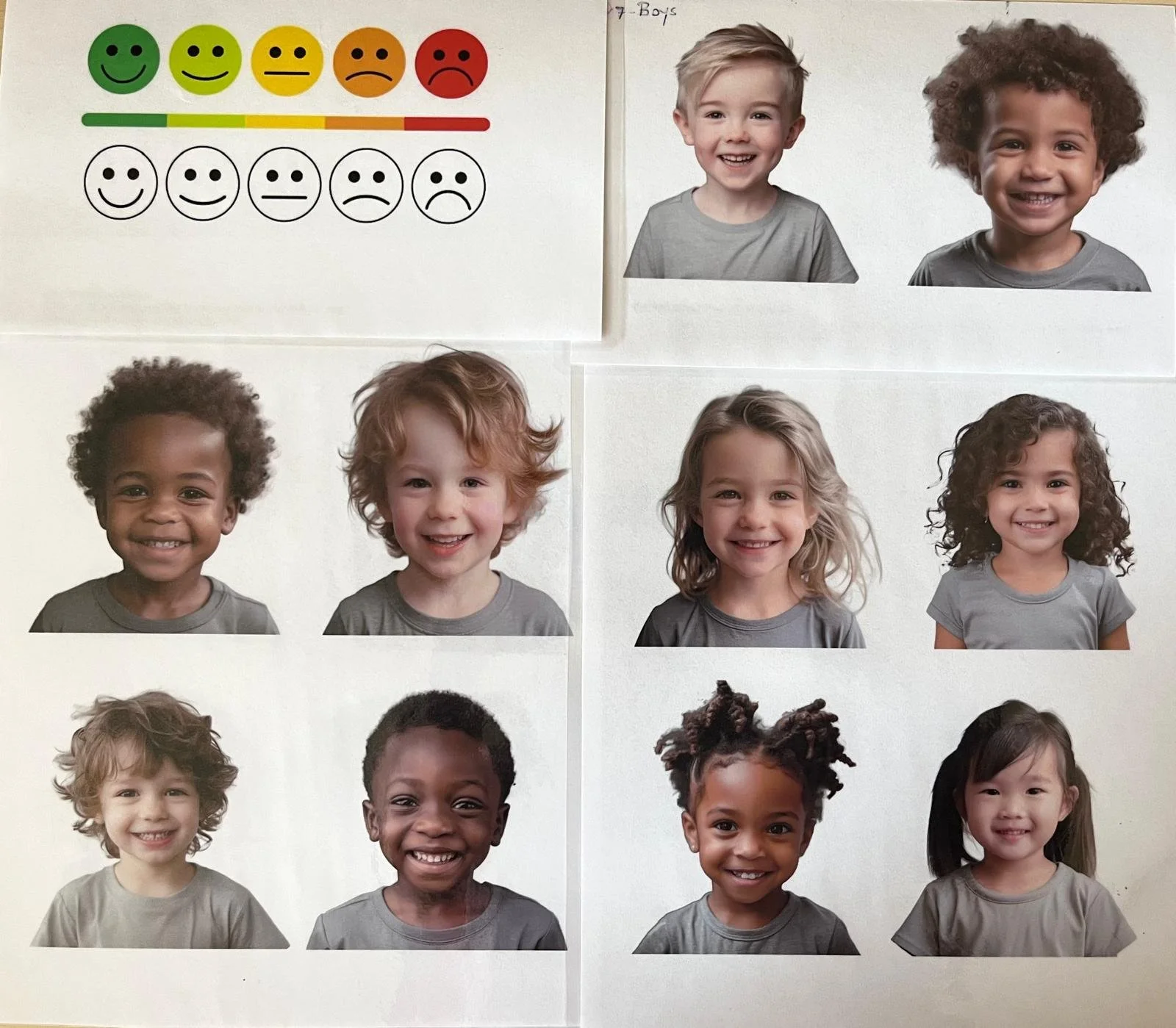
Children were invited individually into a quiet and familiar space. During these structured one-on-one interactions, children were shown images and asked guided questions. The images used in this inquiry were sourced from a research-based image set developed by Rizzo et al. (2026).
The questions focused on:
who they would choose as a friend
how they evaluated others (e.g., “Who is nice?”)
how they interpreted situations
and what assumptions they made about people
These were not teaching activities, but opportunities to listen to children’s thinking in a focused and intentional way. The goal was not to teach children what to think, but to understand how they are already thinking.
Patterns in Children’s Responses
To better understand children’s thinking, responses were reviewed across interactions in a more structured way. The summaries below reflect patterns in how children made choices, evaluations, and associations.
Niceness and Liking
Children were shown images of two children and asked, “How nice is this child?” and “How much do you like this child?” using a simple rating scale. Overall, children described both children positively. At the same time, some children showed a slight preference toward those who looked similar to themselves, while multiracial children often showed more balanced responses.
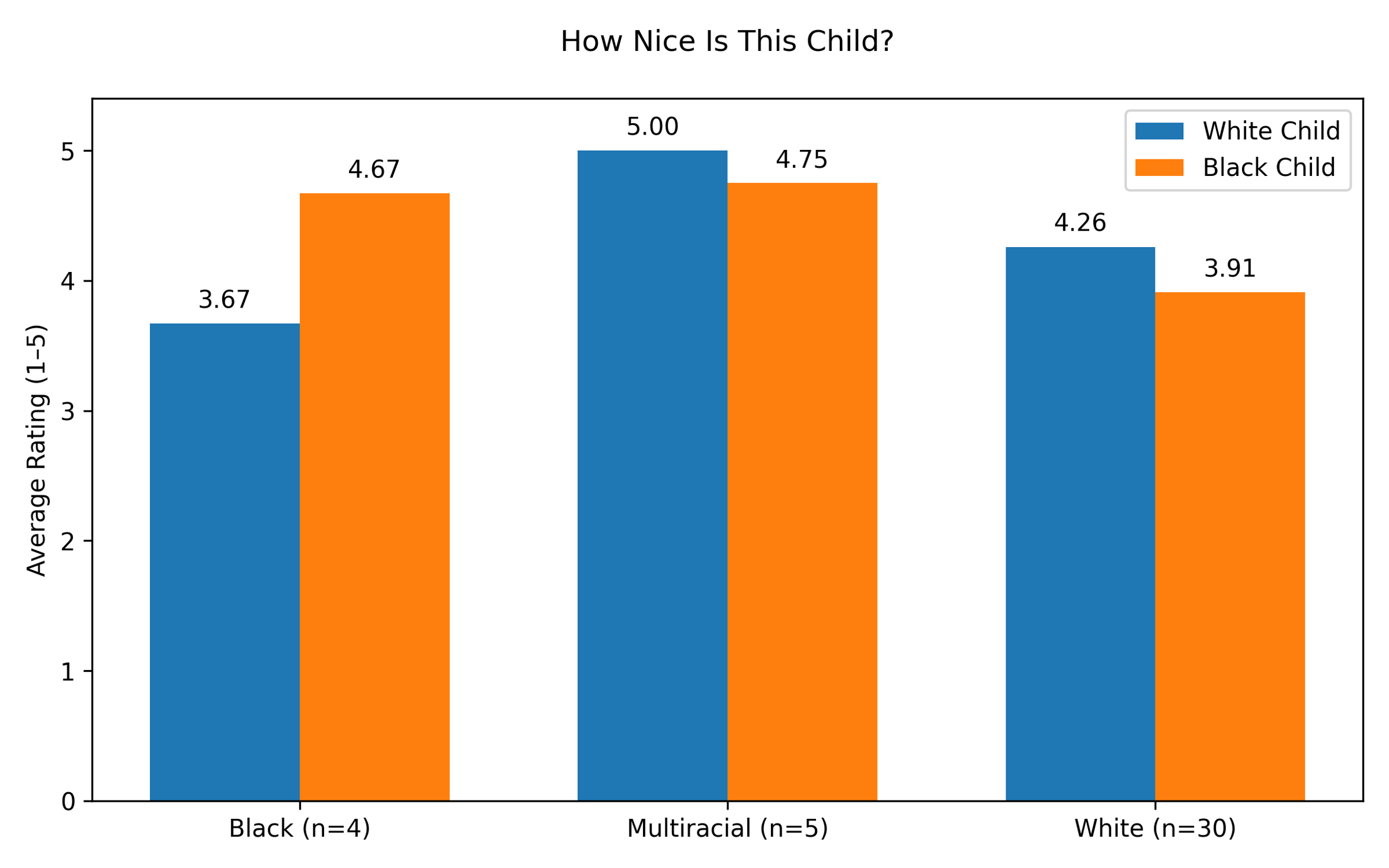
This graph shows how children rated how “nice” each child seemed. Overall, both children were evaluated positively. However, small patterns of same-group preference can be observed, with children sometimes rating those who looked like themselves slightly more positively.
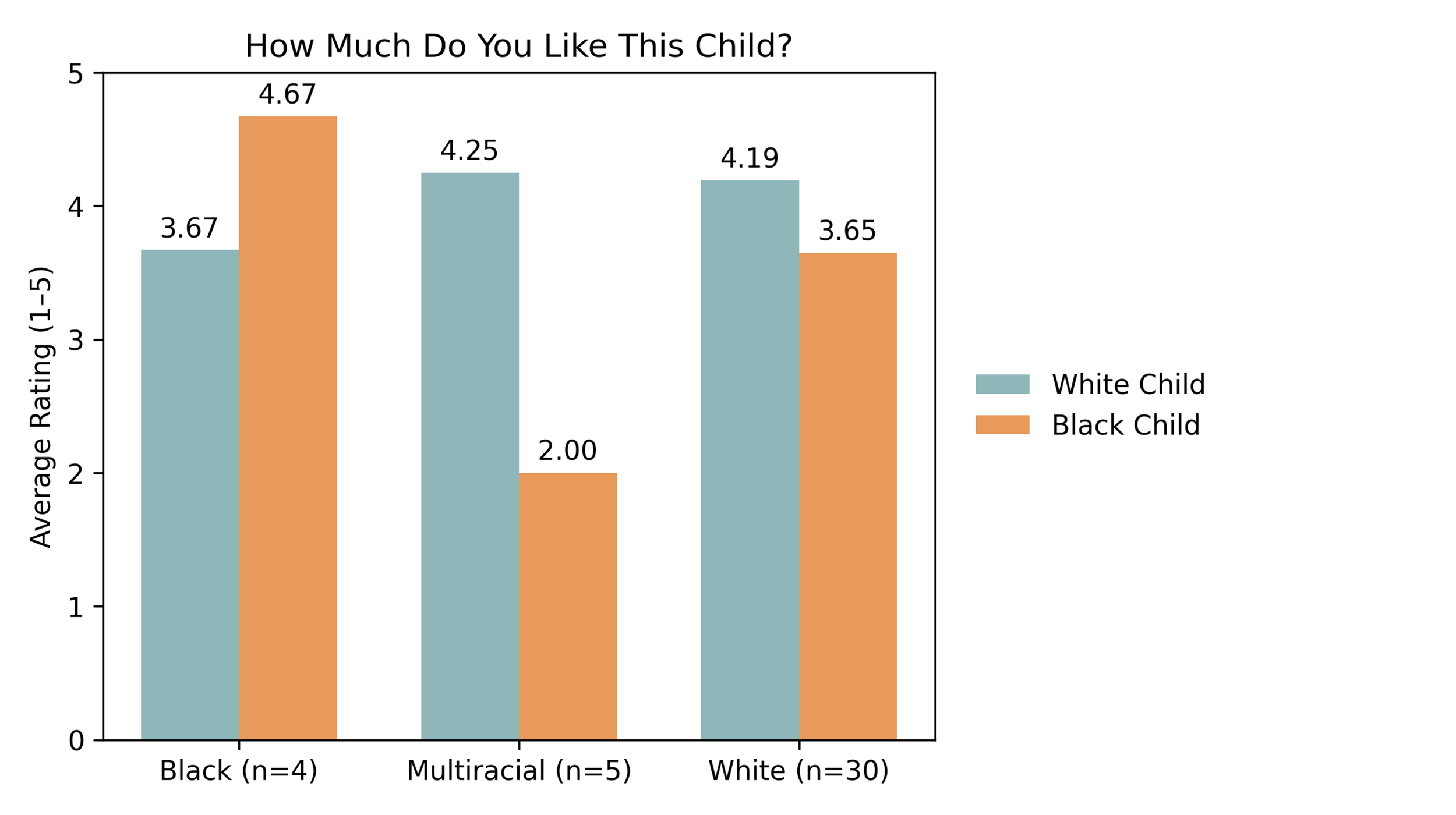
This graph shows how children rated how much they liked each child on a 1–5 scale. When responses were examined by children’s own racial background, different patterns emerged. Black children showed a higher level of liking toward the Black child, while multiracial and White children rated the White child more positively. Ratings for the Black child were lower among multiracial children and somewhat lower among White children.
These patterns suggest that children’s preferences may be influenced by both similarity and broader social experiences. While all children expressed generally positive evaluations, differences in ratings indicate that liking is not evenly distributed and may reflect early in-group preferences as well as variations in social exposure.
Playmate Preferences
Children were shown images of different children and asked, “Who would you most like to play with?” After making a first choice, that option was removed, and they were asked to choose again from the remaining options.
When children made first and second choices:
the White child was more often selected as a first choice
the Black child appeared more often as a second choice
This suggests that children were not excluding peers, but initial preferences showed small differences.
Peers/Parents/Teachers Preferences
Children were shown images of different children and asked, “Who do you think your friends would want you to play with?”, “Who do you think your parents would want you to play with?”, and “Who do you think your teacher would want you to play with?” Children reflected on what they believed others would choose. Patterns suggested that peers were expected to prefer White children more often, parents were perceived as more flexible in their expectations, and teachers were associated with fairness and inclusion.
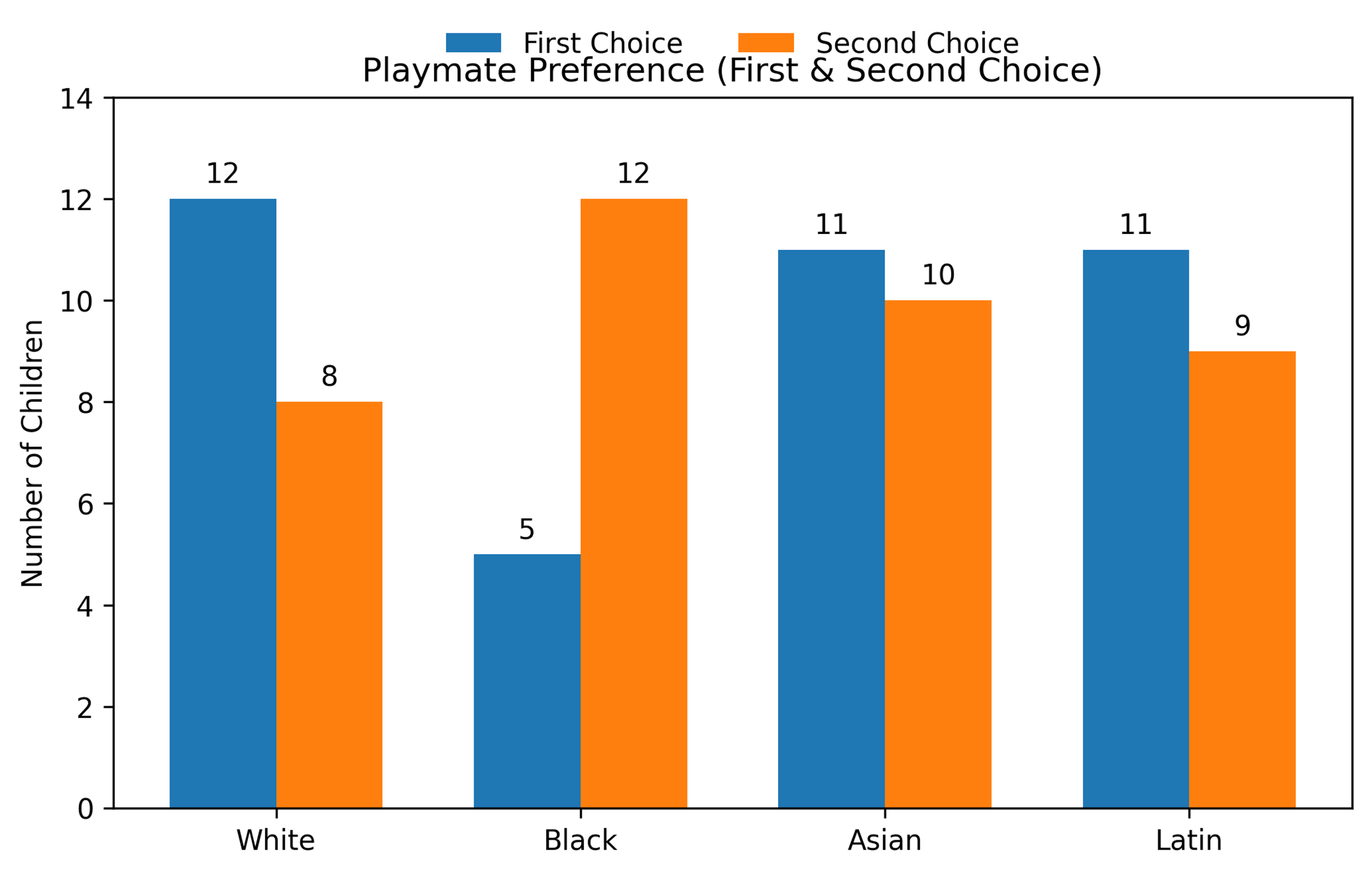
This graph shows children’s first and second playmate choices. While the White child was more frequently selected as a first choice, the Black child appeared more often as a second choice. For the Asian and Latin children, selections were more balanced across first and second choices, with both groups being chosen at relatively similar rates in each category. This suggests that children did not exclude peers, but initial preferences showed small differences, while some groups were approached with more evenly distributed choices.
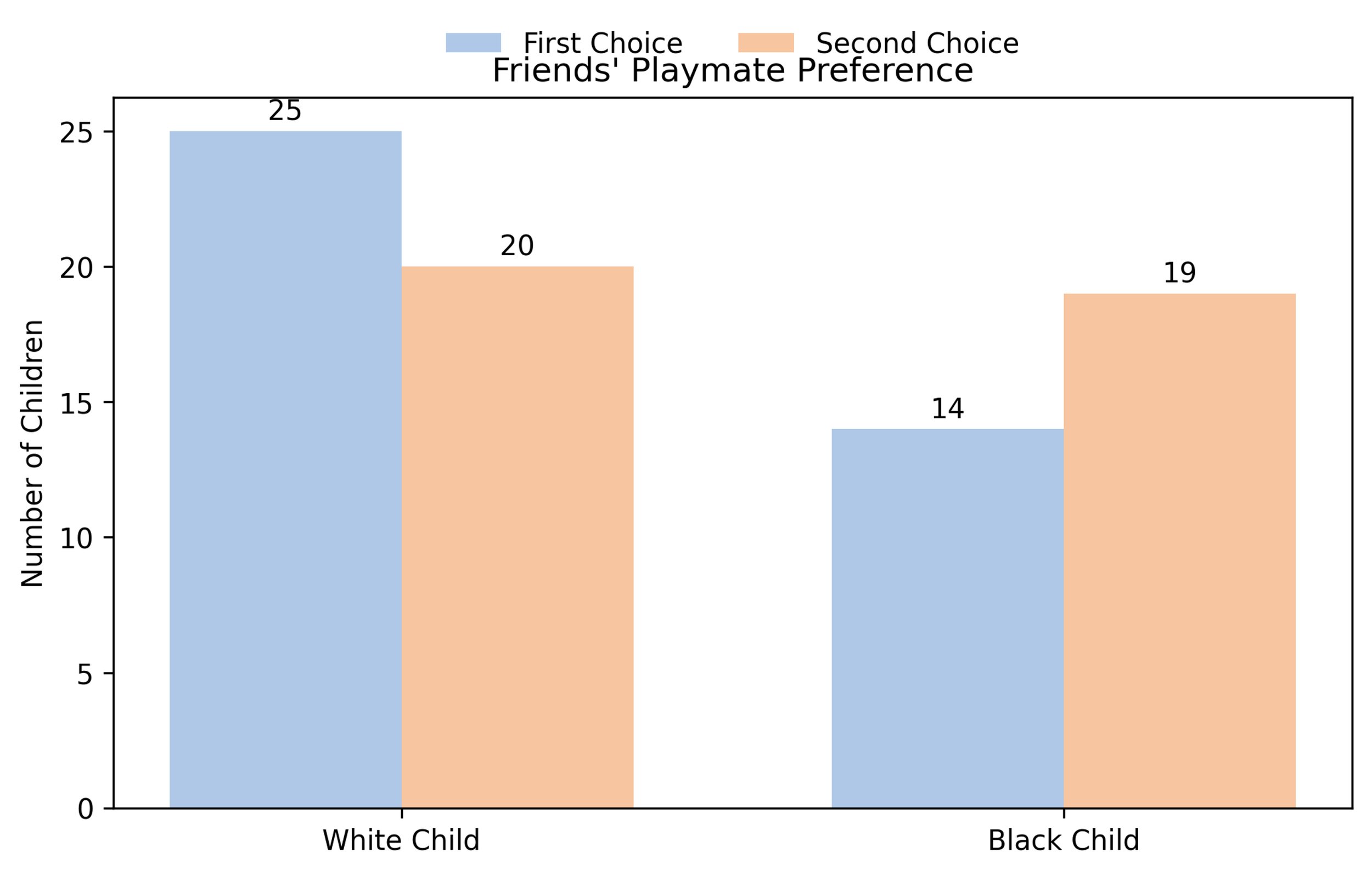
This graph shows children’s perceptions of their friends’ playmate choices. When asked who their friends would choose to play with first and second, children indicated that the White child would be selected more often as a first choice. The Black child, however, appeared more frequently as a second choice.
These patterns suggest that children expect their peers to show a preference pattern similar to their own initial choices. At the same time, the presence of both first and second selections for each child indicates that peers are not seen as excluding others, but rather as showing subtle differences in initial preference.
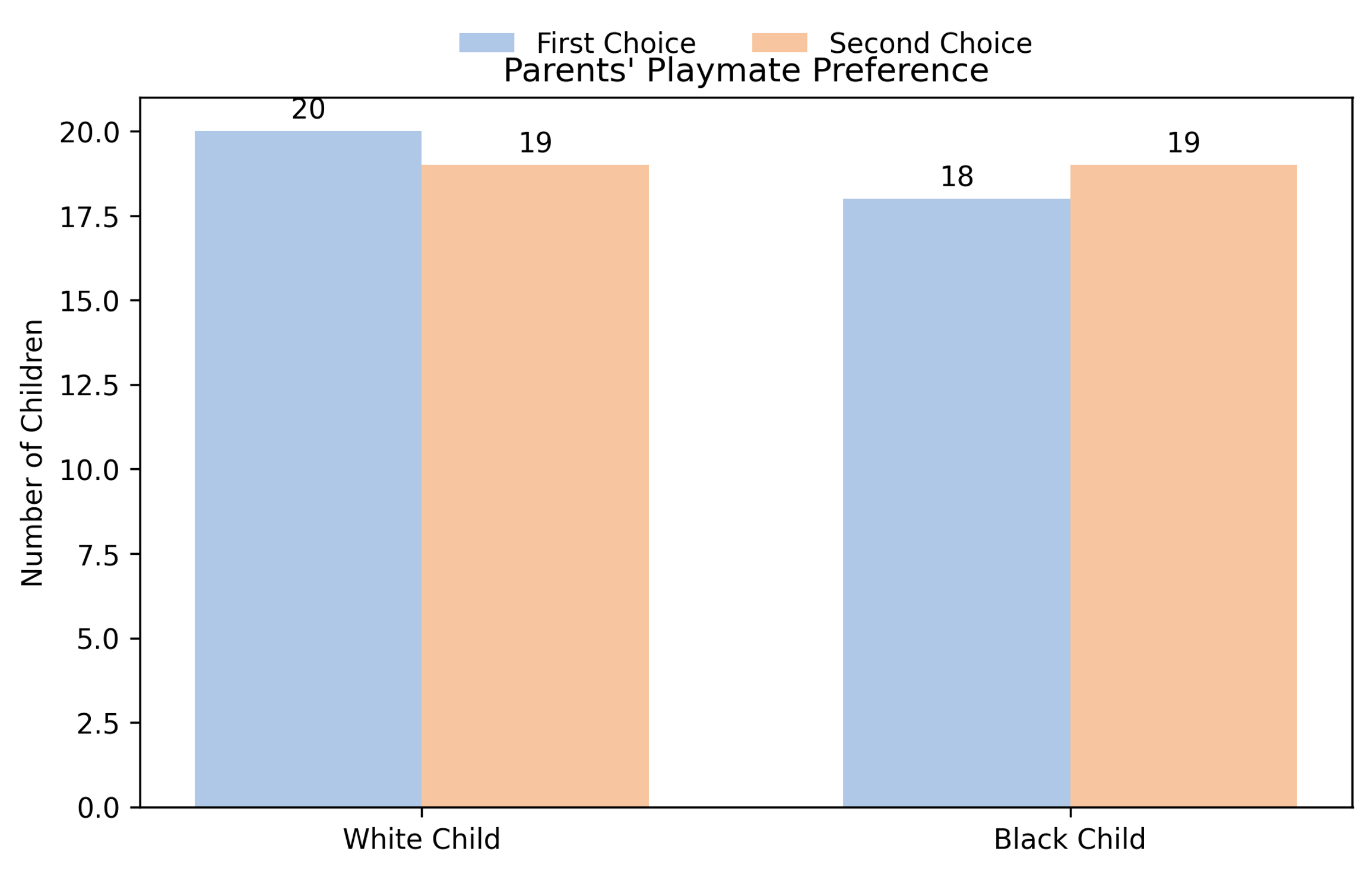
This graph shows children’s perceptions of their parents’ playmate preferences. When asked who their parents would choose for them to play with as a first and second choice, children’s responses were relatively balanced between the White and Black child. The White child was selected slightly more often as a first choice, while both children appeared at similar rates as a second choice.
These patterns suggest that children perceive their parents as more flexible and inclusive in their preferences. Unlike peer expectations, parents were not strongly associated with favoring one child over another, indicating a perception of greater fairness and openness in parental attitudes.
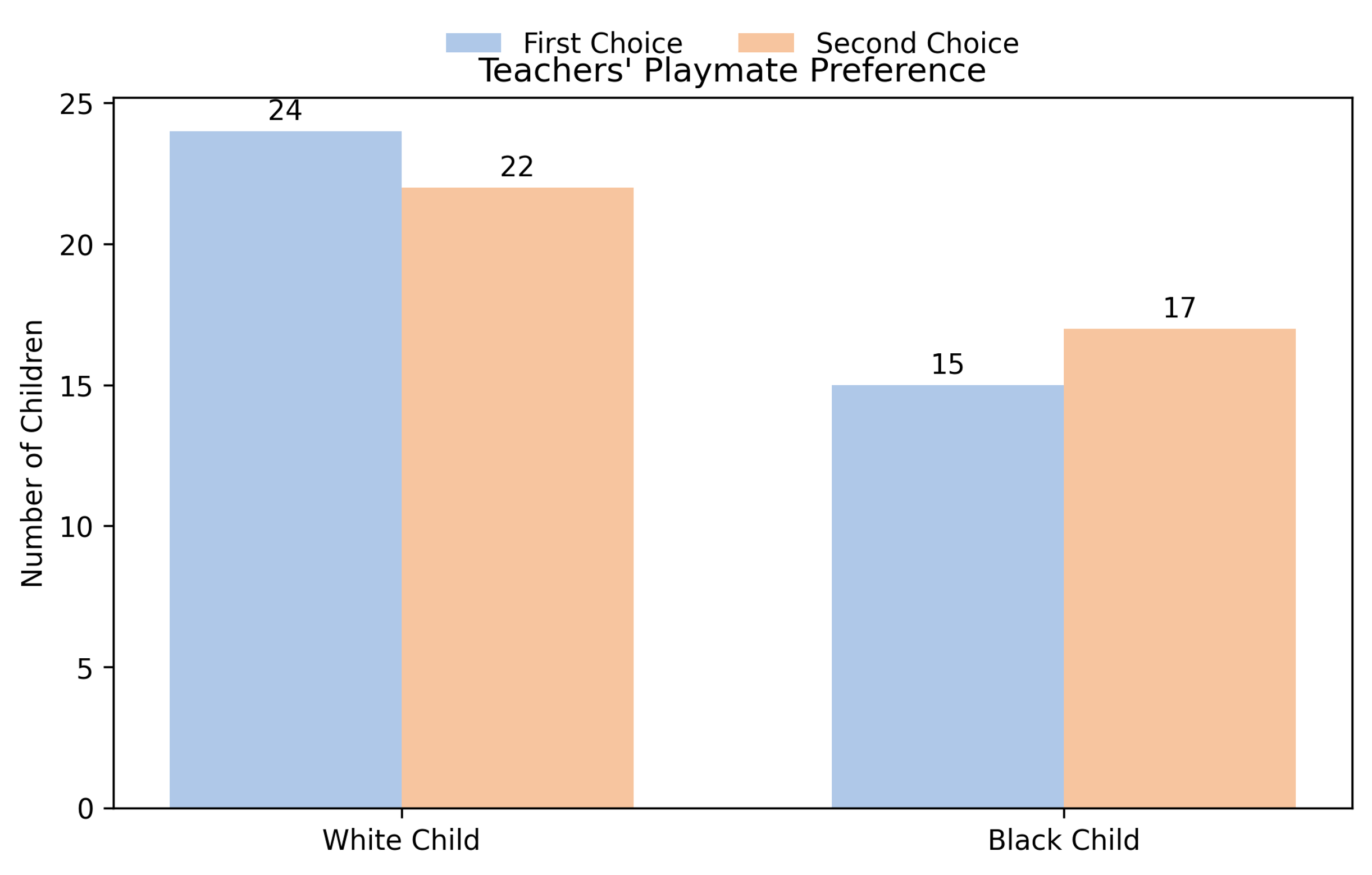
This graph shows children’s perceptions of their teachers’ playmate preferences. When asked who their teachers would choose for them to play with as a first and second choice, children more often indicated the White child as a first choice. The Black child, while also selected, appeared more frequently as a second choice.
These patterns suggest that children may associate teachers with fairness and inclusion, yet still reflect subtle differences in expected preferences. While both children were included in responses, the distribution indicates that children perceive teachers as generally inclusive, but not entirely free from the patterns seen in peer expectations.
Behavior Evaluation
Children were shown images of two children in a shared context at recess and asked to interpret what each child might be doing and whether the behavior was good or bad. Children responded using a 1–5 visual scale with facial expressions ranging from very positive to very negative.
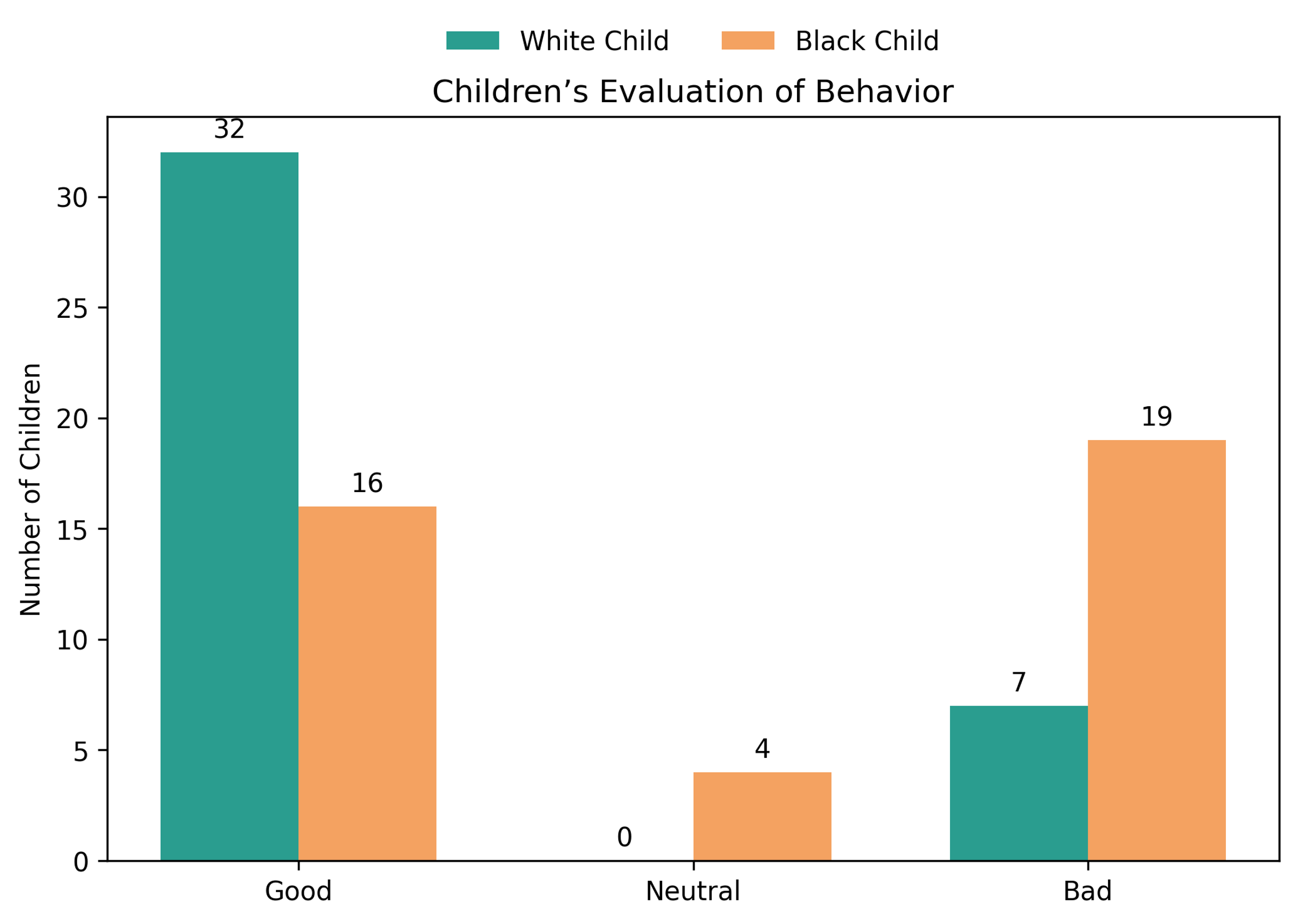
This graph shows how children evaluated the behavior of the two children. When asked whether the behavior was good, neutral, or bad, the White child’s behavior was more often evaluated as good. In contrast, the Black child’s behavior was more frequently rated as bad and, in some cases, as neutral.
These patterns suggest that children’s evaluations may not rely solely on the behavior itself, but can also reflect underlying biases in interpretation. Although both children were evaluated across categories, the differences in ratings indicate that the same or similar behaviors may be perceived differently depending on the child, pointing to subtle bias in how behavior is interpreted.
Social Status Representation
Children were shown images of two children along with images representing different types of houses and were asked to match each child with a house. Children made associations between children and different life conditions based on these matches.
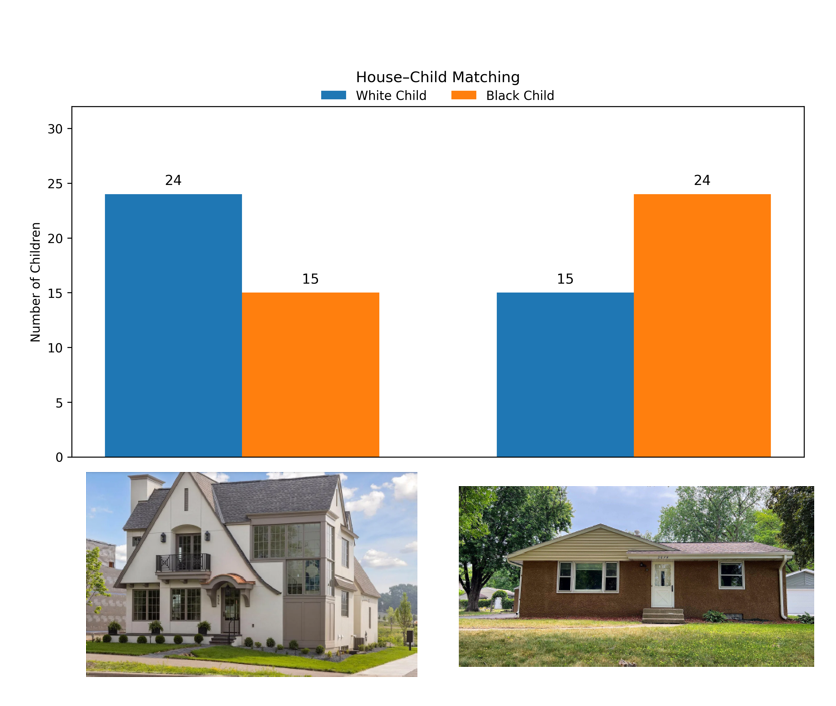
This graph shows how children matched children to houses. When presented with two houses differing in perceived status, children were asked to decide which child lived in which house. The White child was more often associated with the higher-status house, while the Black child was more frequently matched with the lower-status house.
These patterns suggest that children may hold early associations between social status and race. Although children were able to assign both children to both houses, the distribution indicates a tendency to link certain groups with higher or lower status environments, reflecting emerging social categorizations.
Conclusion
Research in early childhood consistently shows that children begin to notice and make sense of ethnic-racial differences from a very early age. Studies suggest that even infants demonstrate sensitivity to racial features and familiarity patterns, indicating that the foundations of ethnic-racial awareness emerge in the earliest years of life (Eddie et al., 2025).
By the preschool years, children increasingly use race as a social category in their judgments. Research has shown that young children may display ingroup preferences in areas such as friendship choices, resource allocation, and social distance, while also beginning to interpret social roles and relationships through race (Muñoz et al., 2025).
In addition, children’s decisions are not shaped only by preference, but also by their developing understanding of social structures. Studies indicate that children may associate race with wealth and status, and these beliefs can influence how they distribute resources and interpret fairness in social situations (Mandalaywala et al., 2021).
The patterns observed in this inquiry align with these broader findings, suggesting that children are actively constructing meaning about race, relationships, and fairness as part of their everyday experiences.
Next Steps
Results from this study and others are driving Big Wonder to continue developing our Arise Framework to promote race consciousness in our classrooms and community. Learn more about how we are nurture race consciousness in our blog article Cultivating Race-Consciousness and The Beauty of Anti-Bias Education. We invite other educators and schools to duplicate this study at their school and to engage in reflective communities of practice to continue this work.
References
Eddie, A. L., Vallotton, C. D., Brophy-Herb, H., Kim, L., Graves, C., & Dalimonte-Merkling, D. (2025). Mapping research on early ethnic-racial awareness development among infants and toddlers: A scoping review. Infancy.
Muñoz, M. A., Enright, E. A., Gaither, S. E., Halim, M. L. D., Pauker, K., Olson, K. R., & Dunham, Y. (2025). Children’s use of race in their social judgments: A multi-site, multi-racial group comparison. Collabra: Psychology.
Mandalaywala, T. M., Benitez, J., Sagar, K., & Rhodes, M. (2021). Why do children show racial biases in their resource allocation decisions? Journal of Experimental Child Psychology, 211, 105224.
Rizzo, M., Straka, B. C., Chao, T. W., Mei, J., & Shang, I. T. (2026, January 5). AI-Faces by Illinois. https://doi.org/10.17605/OSF.IO/VURM5
Acknowledgment
We would like to thank Dr. Michael Thomas Rizzo and his team at the University of Chicago for making the AI-Faces dataset available. These materials supported the development of the image-based interactions used in this inquiry.
